
Postdoctoral Research Fellow, Johns Hopkins
2024 — PresentDeveloping evolutionary deep neural networks for multi-physics problems in solid mechanics, bridging mechanics and machine learning.
Learn moreI’m Meenu, a Postdoctoral Research Fellow at Johns Hopkins University working at the intersection of computational mechanics and scientific machine learning — building solvers, surrogates, and optimization tools that help us understand how structures and materials really behave.
From phase-field fracture and large-scale topology optimization during my Ph.D. at IIT Roorkee, to evolutionary deep neural networks and neural-operator benchmarks at Johns Hopkins, my work is about making hard mechanics problems solvable at scale.

I’m always happy to discuss research ideas, collaborations, or opportunities. Reach me at ukrishn4@jh.edu or fill in the form below.
Milestones
Developing evolutionary deep neural networks for multi-physics problems in solid mechanics, bridging mechanics and machine learning.
Learn more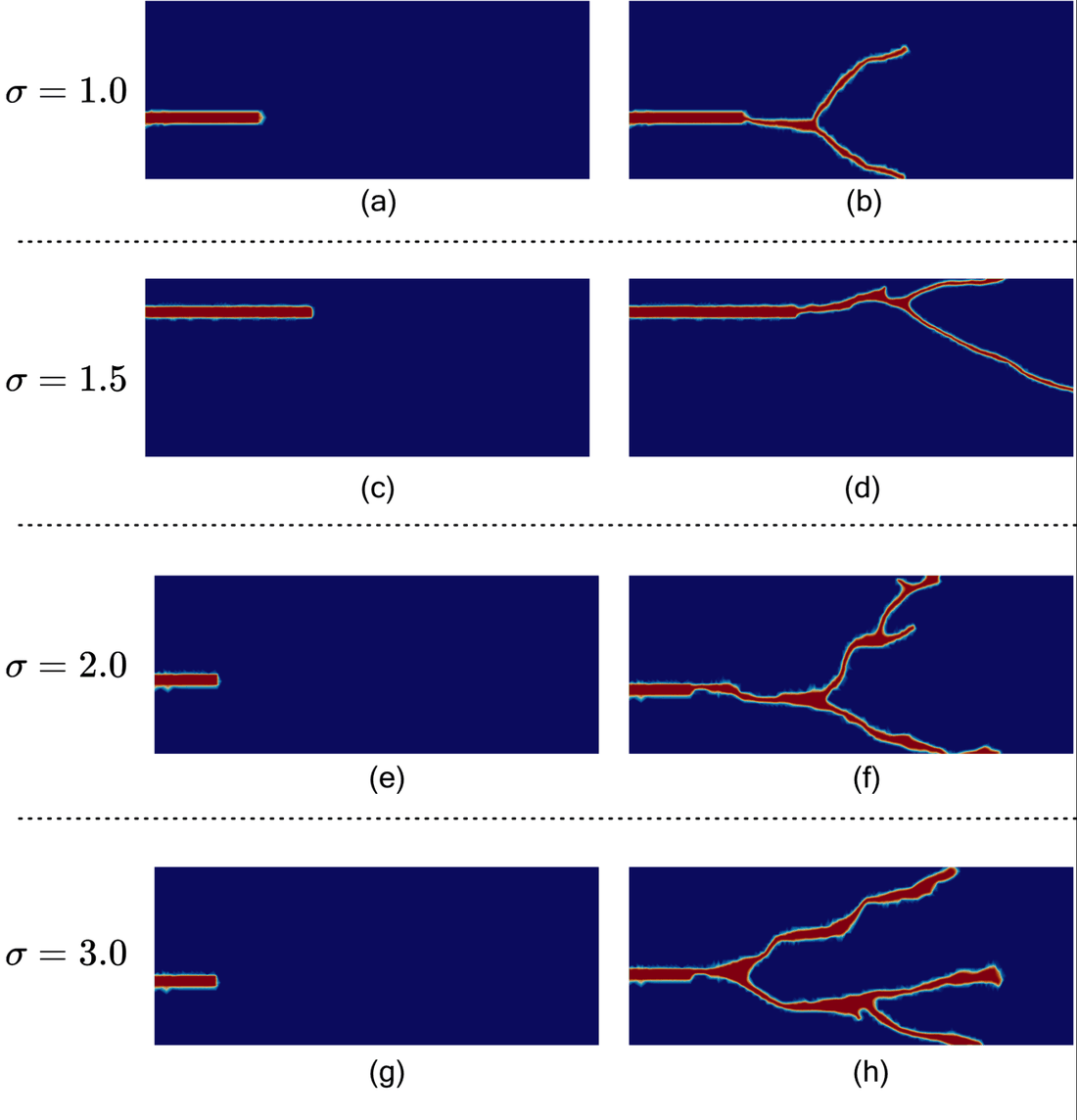
Shared datasets and consistent evaluation so neural-operator surrogates for fracture can finally be compared on equal footing.
Learn more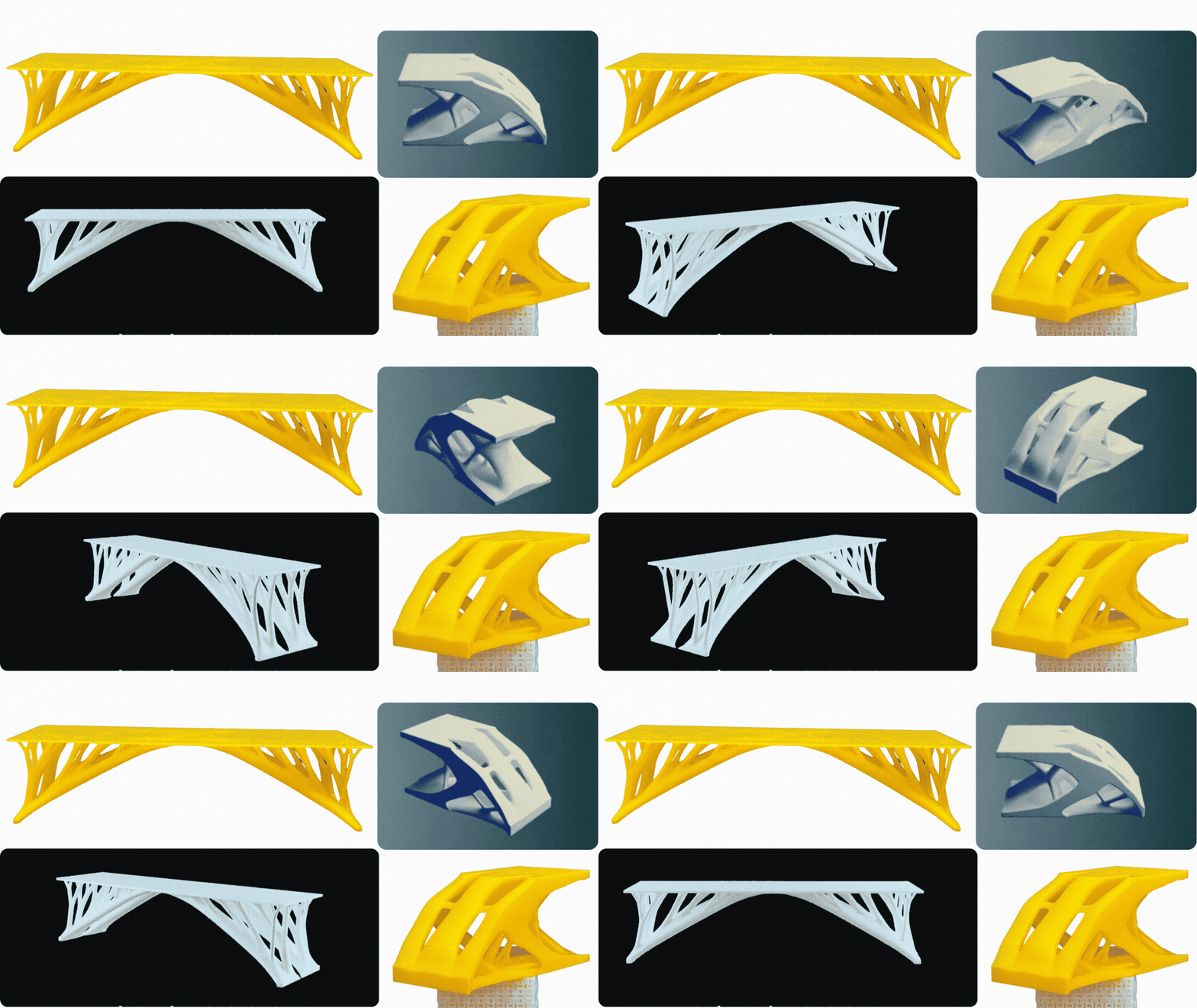
Scaled optimization to large 3D problems in FEniCS with MPI parallelism, then printed the designs to check they really carry their load.
Learn more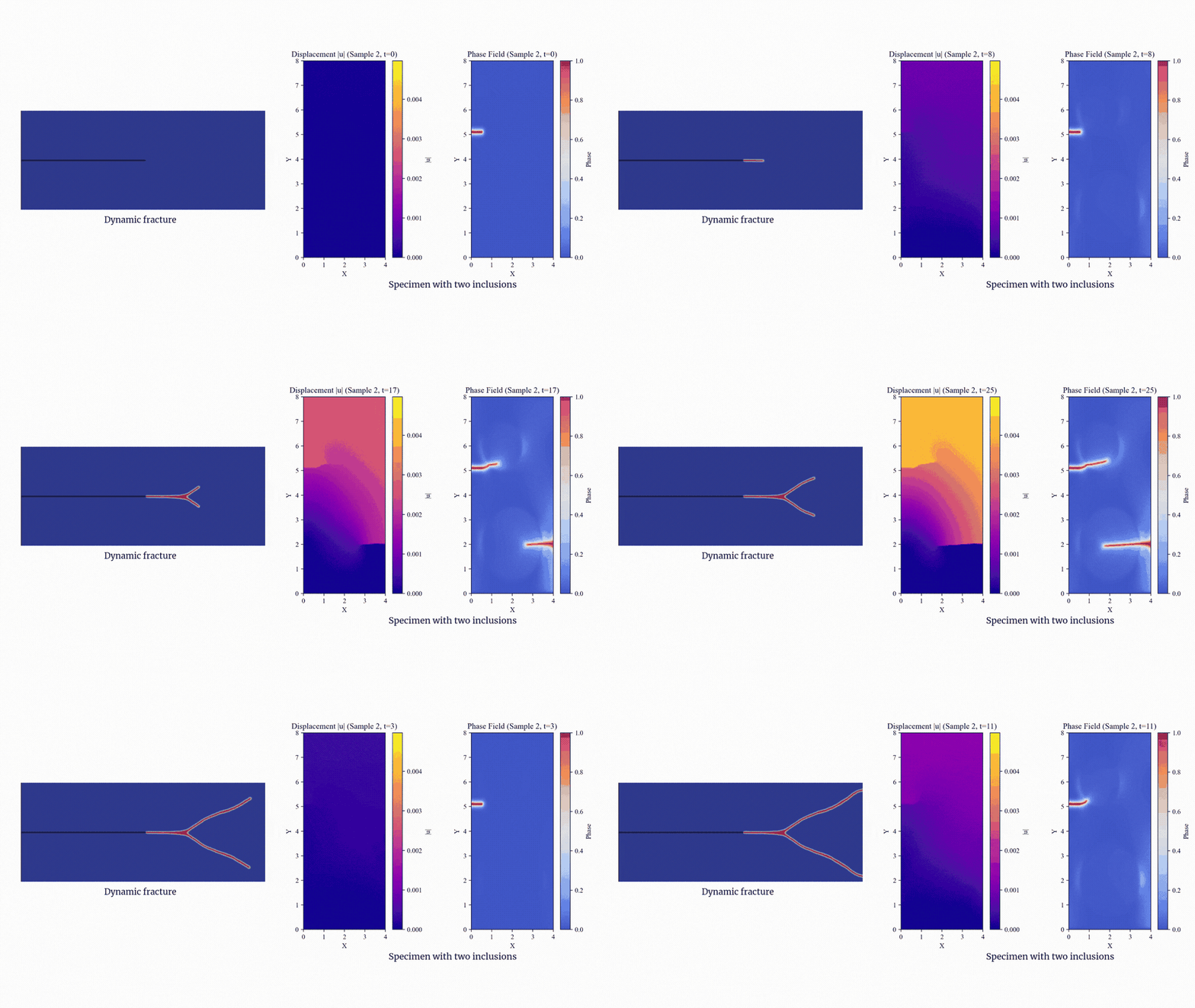
Energy-based error indicators drive mesh refinement, keeping fast crack growth accurate without meshing the whole domain finely.
Learn more
Designing material layouts with negative Poisson’s ratio through simulation, optimization, and fabrication.
Learn more
Efficient algorithms for phase-field fracture and 3D-printable topology optimization: mesh adaptivity, time stepping, and parallel HPC.
Learn moreSelected work
Mesh-free, physics-informed solvers that evolve network parameters in time to march coupled physics forward.
Read the project 02Cracks as a smooth damage field, with refinement guided by an energy-based error indicator instead of a uniformly fine mesh.
Read the project 03Letting the optimizer decide where material goes — scaled to large 3D problems and validated by printing the result.
Read the project